
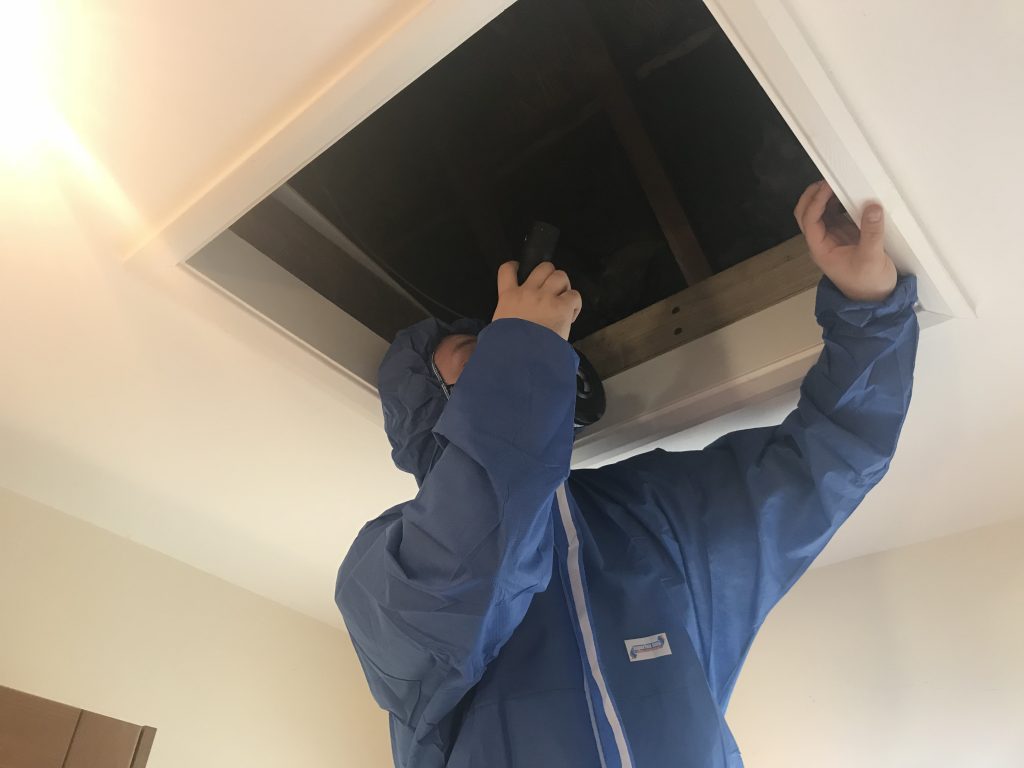
Finding out – or suspecting – that your home contains asbestos can be unsettling. The important thing to know is that asbestos in a home is not automatically an emergency: what matters is the material, its condition and whether anything is likely to disturb it.
Can you live in a house with asbestos?
Yes, people can often continue living in a house containing asbestos, provided the material is in good condition, is unlikely to be disturbed and is appropriately managed.
Finding asbestos does not automatically mean the house is unsafe to occupy or that every material must be removed.
If asbestos materials in your home are in good condition and unlikely to get damaged, it is often best to leave them where they are – and check their condition from time to time.Summary of guidance from the Health and Safety Executive (HSE) · Read the HSE guidance
The important questions are what the material is, where it is, whether it is damaged and what work is planned. An asbestos insulating board panel in a frequently accessed service cupboard may call for a different response from intact asbestos cement sheeting in an undisturbed location.
What makes asbestos hazardous?
The main concern is inhalation of airborne fibres released when asbestos-containing materials are damaged or disturbed. HSE states that the fibres cannot be seen, smelt or felt in the air. Disease may develop decades after exposure, so preventing avoidable exposure matters even when there are no immediate symptoms.
Source: HSE – Asbestos FAQs
Do not assume that a small area of damage is harmless. Equally, do not assume a positive test means an immediate airborne exposure has occurred. A qualified assessment puts the result into context.
Where homeowners may encounter asbestos
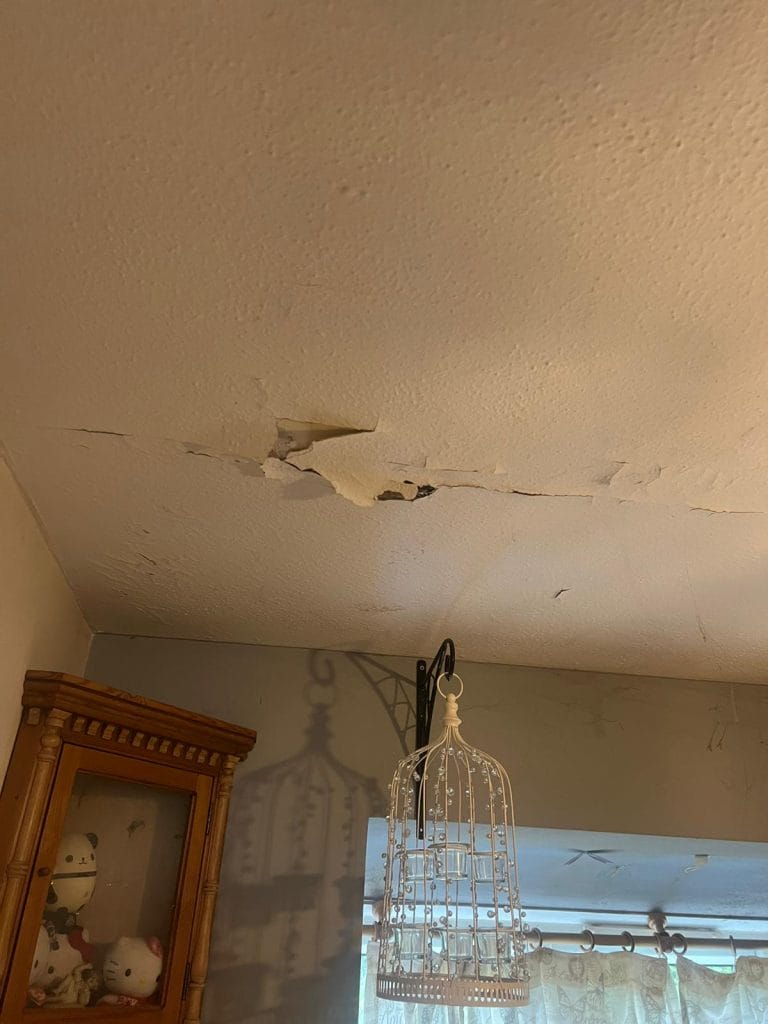
Typical locations include older textured ceilings, garage roofing, soffits, partition boards, floor tiles, pipe insulation and boiler cupboards. Homes built before 2000, including those subsequently renovated, may contain suspect products. Modern-looking paint or plaster does not confirm that older layers are asbestos-free. Our guide to what asbestos looks like describes each of these materials in more detail.
Inside
- Textured ceilings and walls
- Boiler cupboards, airing cupboards and pipe lagging
- Partition walls, bath panels and panels behind fires
- Floor tiles and the adhesive beneath them
- Toilet cisterns and cement water tanks
Outside
- Garage and shed roofs
- Soffits and fascias
- Gutters and downpipes
- Roof tiles, slates and roofing felt
What should you do after a positive test?
First, avoid disturbing the identified material. Then follow a few simple steps:
Do
- Keep a record of its location and condition
- Make sure tradespeople know about it before work begins
- Seek advice on whether leaving it in place, sealing it, monitoring it or removing it is the appropriate option
Don’t
- Try to repair or remove it yourself without the right training
- Sand, scrape or drill it to tidy it up
- Put asbestos waste in household bins – HSE says it must be disposed of as hazardous waste
Slightly damaged asbestos materials can sometimes be repaired by sealing or enclosing them, but only by people with the necessary training. Badly damaged material that is likely to be damaged further should be removed if it cannot be protected.
Summary of guidance from the Health and Safety Executive (HSE) · Read the HSE guidance
Who is responsible for asbestos in a home?
A homeowner generally does not have the same formal duty to manage asbestos in a private dwelling as a non-domestic building dutyholder. However, landlords and those responsible for common parts of residential blocks can have additional legal responsibilities. Professional advice is particularly valuable where responsibilities overlap.
HSE confirms that the duty to manage asbestos applies to non-domestic premises and to the shared parts of some domestic premises. For homeowners, it suggests your local council’s environmental health team as another source of advice. Read the GOV.UK guidance on asbestos in your home.
Renovations, children and everyday living
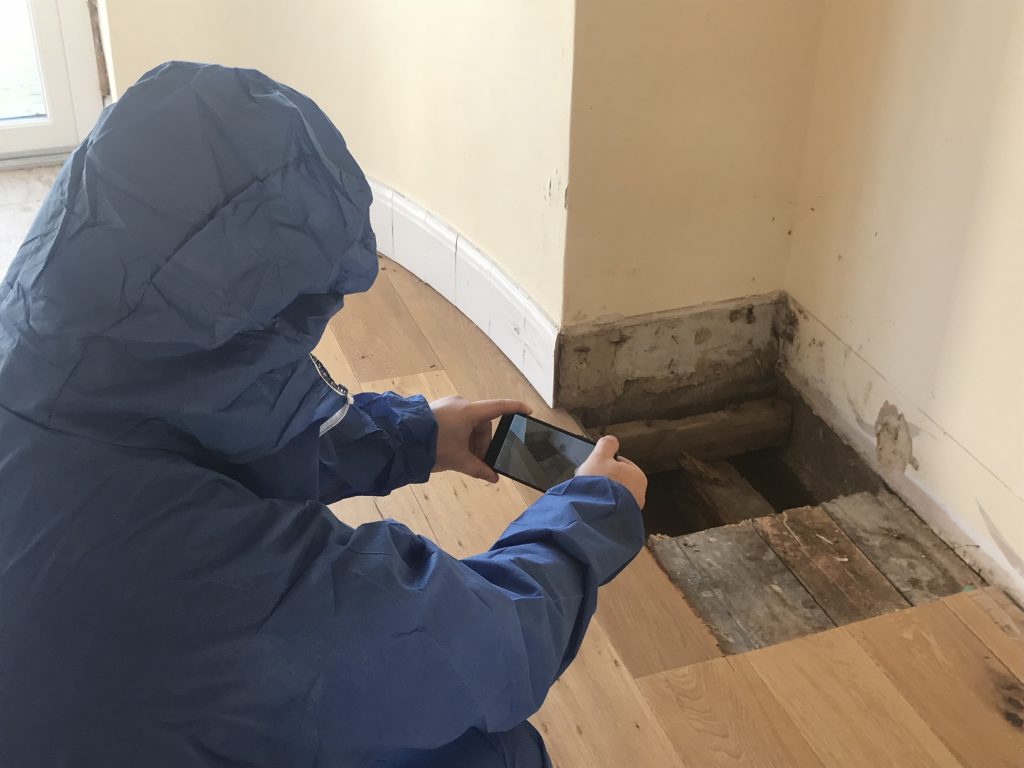
Routine occupation is different from sanding a ceiling, lifting old floor tiles or cutting through a fire-resistant panel. If you plan renovations, ask about a suitable refurbishment survey covering the actual work area. Never rely solely on a historic survey if new areas will be opened up.
If a child has accidentally damaged a suspect panel, stop access to the area and obtain advice rather than attempting household cleaning. Domestic vacuum cleaners are not appropriate for suspected asbestos debris.
HSE strongly encourages the use of trained professionals to repair or remove asbestos-containing materials. If you live on the South Coast, our article on why asbestos is still a problem in South Coast properties explains why older homes in the area so often contain hidden materials.
How Crucial Environmental can help
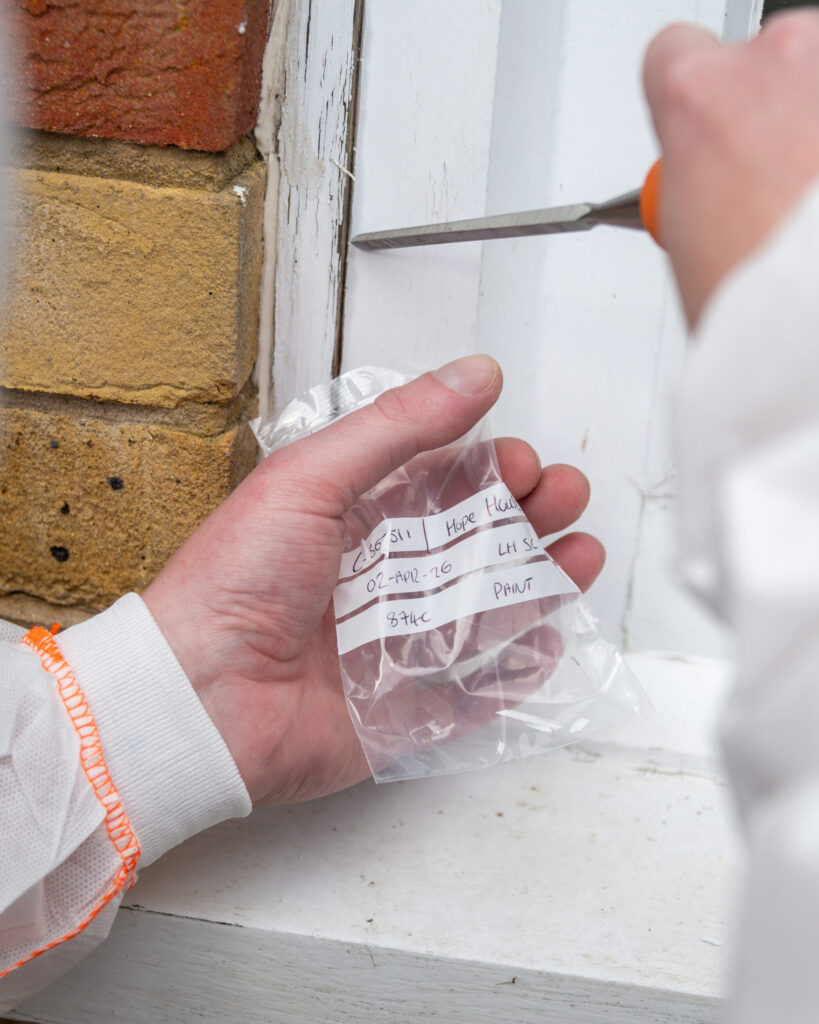
Crucial Environmental offers professional surveys, sampling and testing and removal advice. Testing identifies whether asbestos is present; a competent assessment determines what should happen next.
Key facts
- Living with intact asbestos can be possible.
- Disturbance, damage and future building work are key considerations.
- Never remove a material solely because it looks suspicious; identify it and obtain appropriate advice first.
- Asbestos waste must be disposed of as hazardous waste, never with normal household rubbish.
Frequently asked questions
Must asbestos be removed before selling a house?
There is no universal requirement to remove all asbestos before a sale, although disclosure and survey findings may affect enquiries and negotiations.
Is painting over asbestos safe?
Some sound materials may be encapsulated using an appropriate controlled method, but avoid DIY preparation that could abrade the surface.
Can I stay home during removal?
This depends on the work and isolation arrangements. Follow the contractor’s site-specific plan and any reoccupation requirements.
Speak to Crucial Environmental
If you need clarity about a suspected asbestos-containing material, our team can advise on appropriate surveys, sampling, laboratory analysis and, where needed, safe removal.
Do not disturb suspected asbestos while awaiting advice.