

From Victorian conversions and post-war estates to seaside hotels, schools and industrial premises, the South Coast has a diverse stock of older buildings. Many have been extended or refurbished several times.
Why the asbestos problem has not disappeared
Materials installed before the 1999 ban may still be concealed behind newer finishes.
This is not a claim that coastal towns have a higher asbestos prevalence than elsewhere: the practical risk follows building age, historic use, materials and disturbance.
Asbestos may be present in any building built or refurbished before 2000. It can be visible, or hidden within the building fabric – for example inside wall cavities or fire doors.Summary of guidance from the Health and Safety Executive (HSE) · Read the HSE guidance
That layering is what catches people out. A property that has been extended, re-roofed, rewired or re-plumbed over several decades may contain building products from several different eras, and the newest finish is not a reliable guide to what lies behind it.
Where local owners and contractors encounter it
Suspect materials turn up both outside and inside older properties. For a closer look at how they can appear, see our guide to what asbestos looks like.
Garage and outbuilding roofs
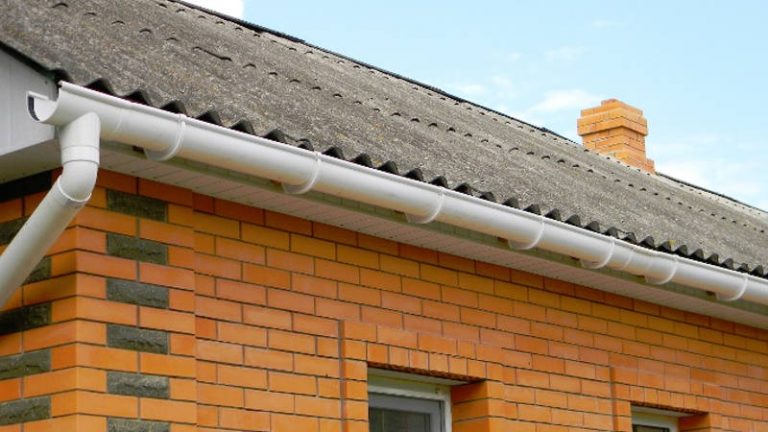
Corrugated cement sheets on garages, sheds and outbuildings are one of the most common finds.
Soffits and rainwater goods
Soffits may be asbestos insulating board or asbestos cement, while some older gutters and downpipes are asbestos cement.
Textured coatings
Decorative ceiling and wall finishes, often known by trade names such as Artex, were originally white but have often been painted over.
Floor tiles and adhesives
Older vinyl and thermoplastic tiles, and the bitumen adhesive beneath them, can be hidden under carpets or newer flooring.
Boiler insulation and service ducts
Lagging on boilers and pipework, and insulation in service ducts, can be particularly hazardous if damaged.
Asbestos insulating board
Used for fire protection in partitions, fire doors, ceiling tiles and panels around windows, and hard to tell apart from ordinary board.
Former commercial premises converted into flats can contain multiple generations of construction products. A recently decorated room can still hide an older board or adhesive beneath the surface.
HSE also reminds building owners to think about older equipment as well as the building itself. Rope seals and insulation in ovens and heaters, gaskets, electrical switchgear and heat-resistant panels can all contain asbestos.
What coastal weather does – and does not – mean
Coastal weather adds a maintenance challenge. Wind, salt exposure and water ingress may contribute to deterioration of roofing and exterior components generally. They do not, on their own, prove asbestos fibre release. A competent inspection should assess the actual material condition.
Condition matters in law as well as in practice. HSE’s guidance treats weathered asbestos cement that is otherwise intact differently from asbestos cement that will be substantially damaged or broken up – and that difference can change how any work on it has to be carried out and notified.

Refurbishment creates the most avoidable surprises
A loft conversion, bathroom strip-out, heating replacement or roof repair may expose materials that have been untouched for decades. The point at which a contractor drills, cuts or removes a panel is often when a previously manageable material becomes an exposure concern.
Installation or refurbishment work that disturbs the fabric of a building where asbestos could be hidden needs a more intrusive survey before the work can start.
Summary of guidance from the Health and Safety Executive (HSE) · Read the HSE guidance
For commercial dutyholders, the Control of Asbestos Regulations 2012 impose specific asbestos management duties. Domestic owners are not subject to the same general duty to manage their private homes, but contractors still have duties to identify and control asbestos risks before undertaking work.
HSE’s advice to homeowners is practical: if you know or suspect there is asbestos in your home, tell any builders, maintenance workers or contractors before they start, so the material is not disturbed by accident. Read HSE’s asbestos FAQs.
Do
- Check for any existing survey or asbestos records
- Tell contractors about known or suspected asbestos
- Arrange a survey that covers the area being worked on
- Keep the work area undisturbed until it has been checked
Don’t
- Start stripping out before the area has been assessed
- Rely on an old survey for areas it did not cover
- Assume fresh paint or plaster means older layers are clear
A sensible approach to surveys and testing
The correct survey depends on the purpose.
Management survey
A management survey helps locate and assess accessible asbestos-containing materials during normal occupation. HSE lists areas such as rooms, ceiling voids, lofts, service ducts, roofs, soffits and gutters.
Refurbishment or demolition survey
A refurbishment or demolition survey investigates the areas affected by intrusive work, and will generally require the work area to be vacated. HSE says the surveyor must confirm the area is fit for reoccupation afterwards.
Crucial Environmental carries out both management surveys and refurbishment surveys. Read HSE’s guidance on asbestos surveys.
Where a specific material is suspect, professional sampling may be sufficient. Crucial Environmental offers surveys and sample analysis through its Worthing laboratory. The team operates from Worthing and Eastbourne as well as other UK offices.
HSE strongly recommends using accredited surveying organisations, and asbestos analysis must be carried out by accredited analysts. UKAS is the recognised accreditation body in Great Britain.
Should asbestos always be removed?
Not necessarily. Sound, undisturbed material may be labelled, recorded and monitored. Removal may be justified if the material is damaged, inaccessible to manage safely, or directly affected by planned work. The choice should follow an assessment, not a blanket rule.
HSE takes the same view: asbestos-containing materials in good condition, and not in a position where they are likely to be damaged, should be left in place and monitored. Where they are in poor condition or likely to be damaged, they should be sealed, enclosed or removed as appropriate.
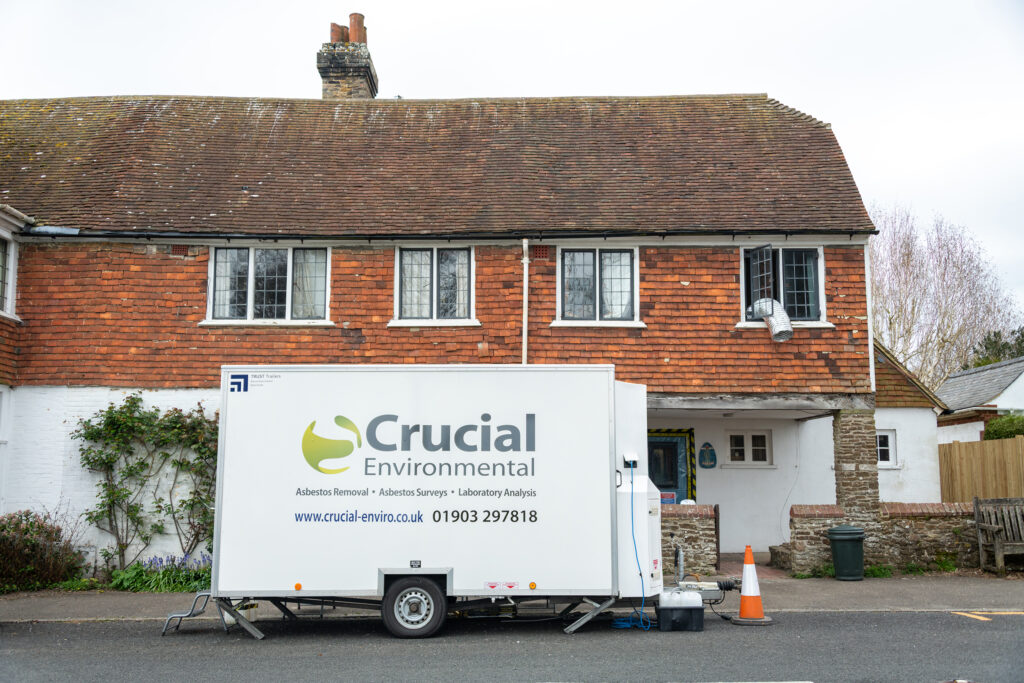
Where removal is needed, the method and licensing category depend on the material and task. Crucial Environmental can advise on controlled removal and associated testing.
Key facts
- South Coast properties are not exempt from a nationwide legacy issue.
- Pre-2000 alterations matter as much as the original construction date.
- Test before disturbing suspect materials.
- Choose the survey to match the proposed work.
- Asbestos can be hidden within the building fabric, such as wall cavities and fire doors.
Frequently asked questions
Does sea air make asbestos dangerous?
Weathering can affect exterior building materials, but risk must be assessed from material type, condition and likelihood of disturbance.
Can a renovated seaside property still contain asbestos?
Yes. Refurbishment may conceal rather than remove older materials.
Do I need a survey before renovating?
If asbestos may be present in the work area, obtain suitable information and assessment before intrusive work begins.
Speak to Crucial Environmental
If you need clarity about a suspected asbestos-containing material, our team can advise on appropriate surveys, sampling, laboratory analysis and, where needed, safe removal.
Do not disturb suspected asbestos while awaiting advice.